Road to the farm & Stains & ashes by Ola Rindal
EU legal guarantee

What does it mean to photograph the same place, and what cannot be photographed?
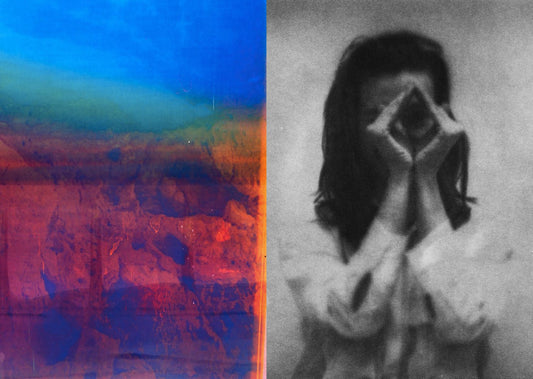
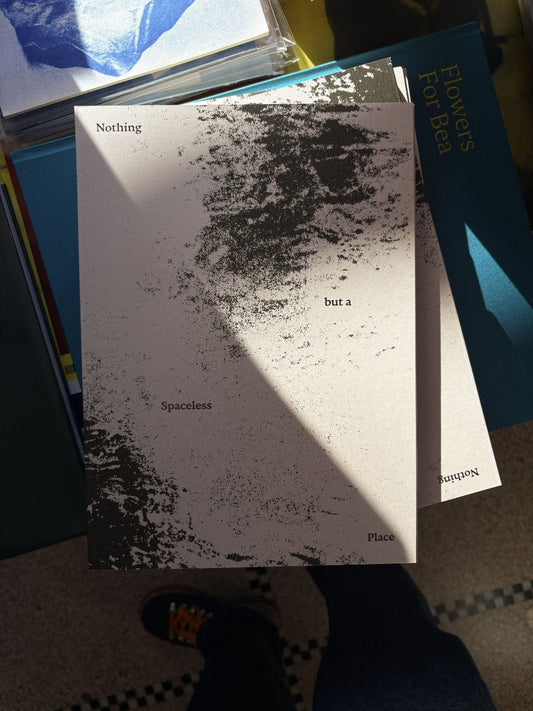
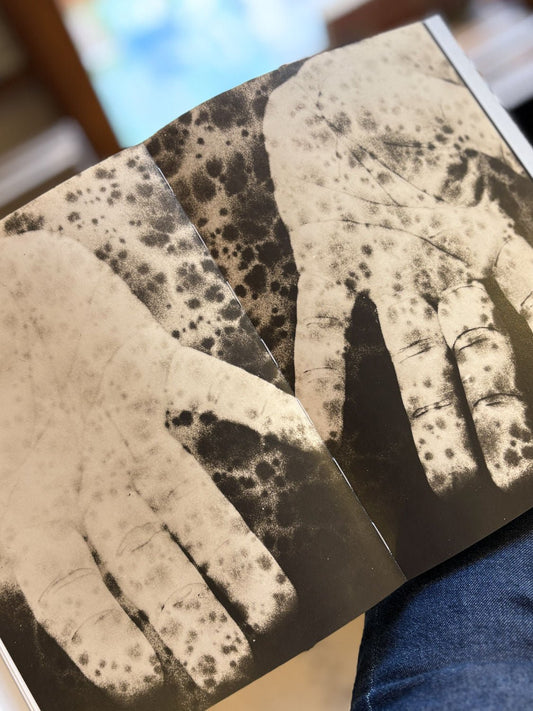
Ola Rindal, a Norwegian photographer who grew up in Fåvang and now moves between Paris and his home village, has stated that he seeks "poetic moments in everyday life that cannot be translated through language or any medium other than photography." Both Road to the Farm and Stains & Ashes take this literally: they photograph what resists clear documentation. Road to the Farm is a series made over many years of a single path—the route to his childhood farm, walked daily through different seasons and weather. Stains & Ashes photographs marks, cracks, and deterioration found in ordinary environments. Neither book aims for perfect clarity. Instead, both use blur, abstraction, and the weathered appearance of surfaces to work with what Rindal calls "things that slip away."

His stated influences—Jurgen Teller, William Eggleston, Anders Edström, Friedlander, Tom Sandberg—are photographers known for unconventional framing and unconventional color or tonality. Rindal has said: "by knowing the rules I was able to break them." About his own process he is direct: he does not rely on happy accidents, but he is "chasing the coincidental" and uses what interests him "as a basis and see what sort of ideas I can show with it." What appears uncontrolled in Stains & Ashes—the blur, the fading, the marks—is deliberate. Similarly, the repeated documentation of one familiar path in Road to the Farm is structured and intentional, not casual.

Both books work with material that has a history: a path worn by footsteps, surfaces marked by time and use. Both resist the idea that photography must make things clear or complete. The common thread is an interest in what photography can do when it accepts what it cannot see clearly—when it photographs repetition, deterioration, and the marks left by time itself, rather than fighting against them.