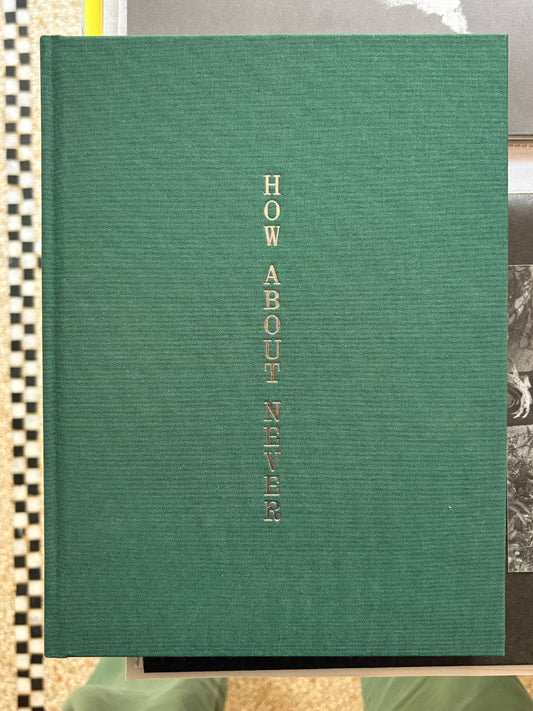
The Marches – Fragments of Time from Arp Clock & Wood Shop by Terry A. Ratzlaff
- In stock, ready to ship
EU legal guarantee

Terry A. Ratzlaff will be signing his book during Arles 2026
Have you ever wondered what happens to time when a clock stops?
Not the time outside — that keeps moving, indifferent as ever — but the time inside, wound into the spring, caught somewhere in the pendulum's back-and-forth. Terry A. Ratzlaff understood this when he stepped into Greg Arp's shop in Bennet, Nebraska: a working repair space and maze-like archive dense with schematics, clippings, broken faces, and the slow residue of decades of labour. Together, they began dismantling time the way you'd dismantle a pocket watch — carefully, aware that something irreplaceable might roll into the dust.
Then the mainspring broke. Eighteen months into the collaboration, Greg Arp died — not winding down toward it, just gone. Ratzlaff was left alone in the shop with 4,024 objects and no particular instruction.
What he did next — photographing each object against a neutral ground, letting the book run backwards from Arp's death in 2023 to the shop's founding in the late 1970s — follows a logic any clockmaker would recognise: you don't discard a broken movement. You open it. You lay the parts out. The Marches is that gesture, stretched across a whole book, where memory and material and loss sit together in the dust, past the point where time has much say over any of it.